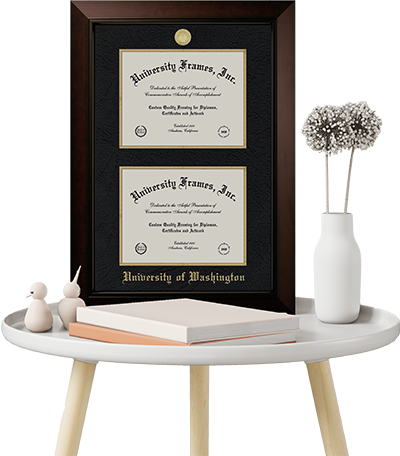
From diplomas to professional credentials, find expertly crafted frames designed to preserve what you earned.


For generations, education was denied, restricted, and limited. Yet Black communities pursued it relentlessly. Every February, Black History Month serves as a time of reflection, recognition, and renewed commitment to honoring the contributions of Black leaders, scholars, innovators, and communities. What began as an effort to ensure Black history was acknowledged in classrooms has grown into a national observance that celebrates excellence across education, business, science, public service, and the arts.
At its core, Black History Month highlights a powerful truth: education has long been a foundation for opportunity, empowerment, and leadership. For generations, access to learning has opened doors, transformed communities, and created pathways to lasting impact.
Black excellence begins in classrooms and lecture halls. It grows through perseverance, mentorship, and scholarship. It extends into leadership, entrepreneurship, and generational legacy. And it continues to inspire future students to pursue their dreams with confidence and pride.
These facts underscore a simple but profound reality: Black History Month was rooted in the belief that education shapes understanding, opportunity, and national progress.
In 1926, historian and scholar Carter G. Woodson, widely known as the Father of Black History, established contributions to ensure Black Americans were recognized within the American educational system.
Woodson believed history must be taught fully and truthfully. He understood that when students see themselves reflected in academic narratives, it strengthens identity, confidence, and ambition.
His work extended beyond simply adding overlooked stories to textbooks. Woodson sought to reshape how American history was researched, documented, and taught. Through scholarship, institutional advocacy, and public engagement, he positioned education as a powerful tool for cultural recognition and empowerment.
In 1976, during the celebration of the U.S. Bicentennial, the observance he created officially expanded into Black History Month, receiving formal national recognition.
The transition from a week to a month reflects a growing acknowledgment of Black contributions across every discipline, education, science, business, law, the arts, and public service. What began as an academic initiative evolved into a nationwide commitment to honoring achievement, resilience, and progress.
Education has historically been both a barrier and a breakthrough for Black Americans. In many periods of U.S. history, access to formal schooling was intentionally restricted through segregation, discriminatory policies, and systemic inequities. Laws once prohibited literacy. Institutions denied admission. Resources were unequally distributed.
Yet even in the face of these obstacles, Black communities consistently prioritized learning.
Education was never viewed as optional; it was essential. Literacy represented empowerment. Scholarship represented a possibility. Academic achievement represented progress.
Church basements, community schools, and later Historically Black Colleges and Universities became more than educational institutions; they became symbols of resilience. Classrooms were spaces where ambition could take root despite social limitations. Teachers became mentors and advocates. Schools became centers of cultural affirmation and intellectual growth.
Higher education, in particular, emerged as a powerful pathway to advancement. A college degree opened doors to professions previously inaccessible. It created opportunities for economic mobility, civic engagement, and leadership. It equipped graduates to influence policy, drive innovation, and advocate for justice within systems that once excluded them.
For many families, a college diploma represented generational change, the shift from limited opportunity to expanded possibility.
But the impact of education extends far beyond career prospects.
Education builds confidence. It strengthens analytical thinking. It encourages creativity and problem-solving. It fosters collaboration and leadership. It prepares individuals not only to enter industries but to transform them.
Throughout history, academic institutions, especially HBCUs, have nurtured environments where students are challenged intellectually while also being supported culturally. These institutions have empowered graduates to move forward with both skill and self-assurance, carrying their education into boardrooms, laboratories, courtrooms, classrooms, and communities across the country.
During Black History Month, reflecting on the role of education reminds us that every diploma carries layered meaning. It symbolizes knowledge earned, barriers overcome, and futures expanded.
Historically Black Colleges and Universities (HBCUs) were established primarily in the 19th century to provide higher education opportunities to Black students who were excluded from many institutions. Today, there are over 100 HBCUs across the United States, and their impact continues to resonate nationally and globally.
Institutions such as Howard University, Spelman College, Morehouse College, Florida A&M University, and North Carolina A&T State University have developed leaders in law, medicine, engineering, public service, business, and the arts.
HBCUs have played a pivotal role in cultivating influential graduates who have shaped civil rights, public policy, science, and corporate leadership. These institutions foster environments that emphasize academic rigor alongside cultural affirmation.
Beyond academics, HBCUs serve as hubs of cultural preservation and community empowerment. They provide supportive spaces where scholarship and identity coexist, strengthening both intellectual and social development.
Today, HBCUs continue to produce a significant number of Black professionals in STEM, education, and public service fields. Their legacy is not confined to history; it is active, evolving, and influential.
Education has long served as the foundation upon which transformative leadership is built. For generations, academic institutions have nurtured not only intellectual growth, but also moral courage, critical thinking, and a commitment to service. Many of the most influential figures in American history drew strength from their educational experiences, using knowledge as a tool to challenge injustice, advance innovation, and reshape society.
Their stories reinforce a powerful truth: education does not merely prepare individuals for careers; it prepares them to shape history.
Before he became one of the most influential voices of the Civil Rights Movement, Martin Luther King Jr. was a dedicated student of theology and philosophy. He earned his undergraduate degree from Morehouse College, where he was mentored by college president Dr. Benjamin E. Mays, whose teachings on leadership and moral responsibility deeply influenced him.
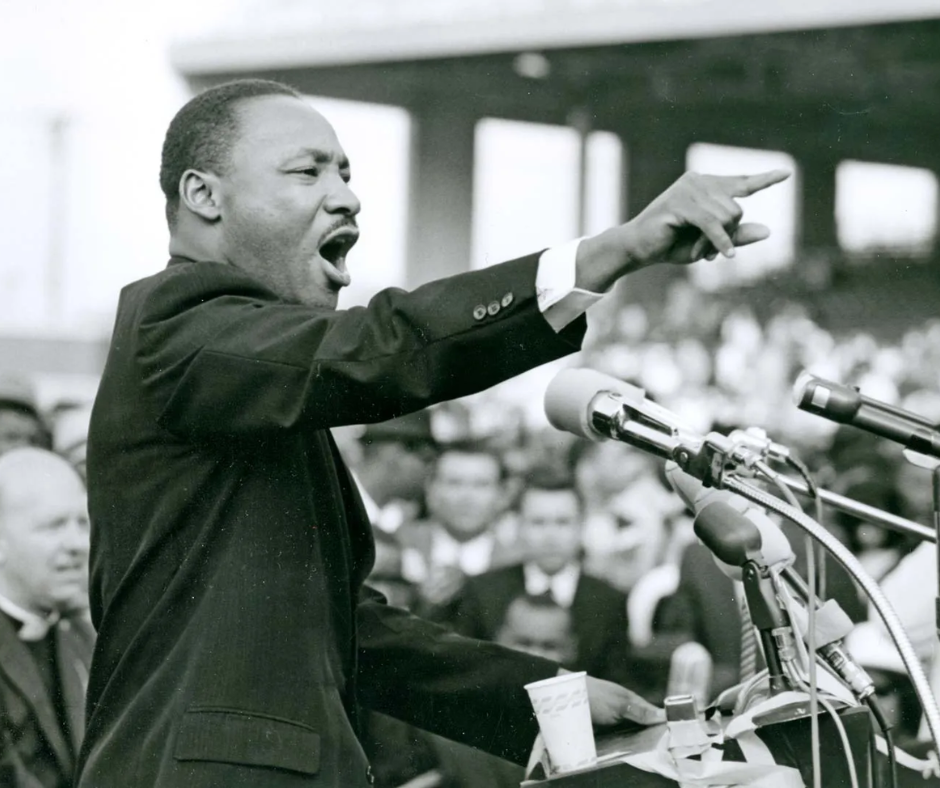
Image Source: Britannica.com
King later pursued graduate studies at Boston University, earning a Ph.D. in systematic theology. His academic training sharpened his understanding of ethics, nonviolent resistance, and social justice, principles that became central to his leadership.
Dr. King's journey demonstrates how scholarship and moral philosophy can extend far beyond the classroom, influencing global movements for equality and human rights.
Thurgood Marshall
Thurgood Marshall's legal education became one of the most powerful instruments of social change in American history. After being denied admission to the University of Maryland Law School because of segregation, Marshall enrolled at Howard University School of Law.
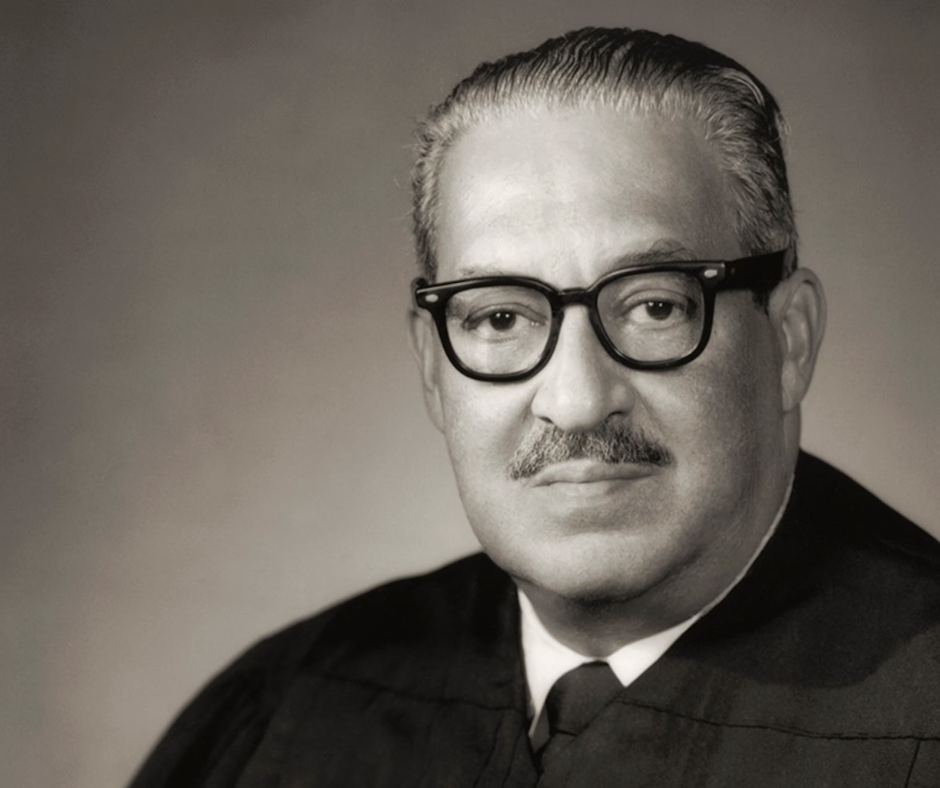
Image Source: Britannica.com
At Howard, under the mentorship of Charles Hamilton Houston, Marshall developed the legal strategy that would later dismantle segregation in public education. As lead counsel in Brown v. Board of Education, he argued successfully before the U.S. Supreme Court, leading to a landmark decision that declared racial segregation in public schools unconstitutional.
In 1967, Marshall became the first Black Justice appointed to the U.S. Supreme Court, a historic milestone rooted in the rigorous legal education he received at an HBCU.
His story illustrates how education can equip leaders not only with expertise but with the tools to transform the legal and social fabric of a nation.
Katherine Johnson's brilliance in mathematics paved the way for groundbreaking achievements in space exploration. A gifted student from an early age, she attended West Virginia State College (now West Virginia State University), an HBCU, where she graduated summa cum laude with degrees in mathematics and French at just 18 years old.

Image Source: nasa.gov
Her advanced mathematical calculations became critical to NASA's early space missions, including the trajectory analysis for Alan Shepard's first U.S. human spaceflight and the orbital calculations for John Glenn's historic mission. Glenn himself requested that Johnson personally verify the computer-generated numbers before launch, a testament to her expertise.
Johnson's academic foundation empowered her to contribute to some of the most significant scientific achievements of the 20th century, proving that education fuels innovation and discovery.
These leaders, along with countless others, reflect a recurring and powerful theme: education equips individuals with the knowledge, confidence, and critical thinking skills necessary to influence change.
From pulpits to courtrooms to laboratories, academic institutions have shaped leaders who redefine what is possible. Historically Black Colleges and Universities, in particular, have played a pivotal role in cultivating environments where intellectual excellence and social responsibility intersect.
During Black History Month, reflecting on these figures reminds us that diplomas represent more than completed coursework. They symbolize preparation, discipline, and readiness to contribute meaningfully to the world.
Education builds leaders. Leaders shape history. And the legacy continues.
Higher education has long served as a launching point for entrepreneurship, executive leadership, and economic mobility. For many graduates, a college degree is not simply an academic milestone; it is a gateway to influence, ownership, and long-term financial stability.
The classroom is often where leadership begins.
Within lecture halls and seminar discussions, students develop analytical thinking, strategic problem-solving skills, and the confidence to navigate complex systems. They learn how to interpret data, communicate ideas effectively, collaborate across perspectives, and manage challenges, foundational skills that later shape boardrooms, businesses, and institutions.
For Black professionals in particular, education has played a critical role in expanding representation in corporate leadership and entrepreneurship. Black-owned businesses contribute significantly to job creation, innovation, and community reinvestment. Corporate executives and founders use their education not only to build companies but to mentor others, influence policy, and create pathways for future leaders.
Economic empowerment often begins with academic preparation.
Universities provide more than coursework; they provide networks. Professors become advisors. Peers become future business partners. Alumni connections open doors to internships, funding opportunities, and executive roles. These networks frequently extend well beyond graduation, forming the backbone of professional advancement.
From startups to Fortune 500 companies, representation in boardrooms begins with representation in classrooms.
When students are equipped with quality education and supported within strong academic communities, including Historically Black Colleges and Universities, they are positioned not only to participate in the economy but to shape it.
During Black History Month, recognizing the connection between education and economic empowerment highlights a broader truth: academic achievement fuels generational progress. A degree can influence career trajectories, business ownership, wealth-building, and community leadership for decades.
Education plants the seed. Leadership nurtures growth. Economic empowerment strengthens communities. And it all begins in the classroom.
A diploma represents far more than the completion of coursework. It is a symbol of perseverance, sacrifice, discipline, and ambition. For many graduates, especially first-generation college students, earning a degree marks a defining moment, not just for themselves, but for their families and communities.
Behind every diploma is a story.
It may be the story of parents who worked multiple jobs to make tuition possible. It may reflect long nights of studying, overcoming financial challenges, navigating unfamiliar systems, or balancing school with family responsibilities. For some, it represents breaking barriers that once limited access to higher education.
Within the context of Black History Month, academic achievement carries even deeper meaning. Education has historically been a pathway to empowerment, economic mobility, leadership, and community transformation. A diploma, therefore, is not simply a document. It is evidence of resilience and progress.
When displayed proudly, it becomes a visible reminder of what dedication can accomplish.
In a digital world where achievements are often reduced to online profiles and announcements, the physical preservation of a diploma holds powerful significance.
A professionally framed diploma transforms a milestone into a lasting legacy. It becomes something tangible, something that can be passed down, admired, and remembered. Whether displayed in a home, office, or professional setting, it reinforces pride and accomplishment every day.
For younger generations, seeing a parent's or grandparent's degree displayed prominently can be transformative. It sends a clear message: Education matters. Achievement matters. Your goals are attainable.
Preservation is about storytelling. A framed diploma tells the story of a journey of effort, commitment, and growth. It connects past sacrifices with future aspirations. It bridges generations.
And during Black History Month, when we reflect on progress built through education and opportunity, honoring academic milestones becomes a meaningful way to celebrate that progress.
For graduates of Historically Black Colleges and Universities, a diploma also represents institutional pride and cultural heritage.
Institutions such as Howard University, Spelman College, Morehouse College, Florida A&M University, and North Carolina A&T State University have long served as centers of scholarship, leadership development, and cultural affirmation. Graduating from these institutions is not only a personal achievement, but it is a participation in a powerful legacy.
HBCUs have shaped leaders in civil rights, science, business, public service, and the arts. They have provided spaces where academic excellence and cultural identity are celebrated together.
University Frames offers officially licensed diploma frames for select colleges and universities, including Historically Black Colleges and Universities. Each frame is thoughtfully designed to reflect the prestige and identity of the institution it represents. Official seals, school colors, and quality craftsmanship ensure that graduates can honor their achievement in a way that feels authentic and enduring.
This is not about decoration; it is about recognition. It is about honoring years of commitment. It is about celebrating academic excellence. It is about preserving a milestone that future generations can see and draw inspiration from.
During Black History Month, as we reflect on the transformative power of education, taking the time to preserve and display academic achievements becomes an act of celebration. It affirms that the journey matters. It reinforces that progress continues. And it ensures that stories of resilience and excellence remain visible for years to come.
Historically Black Colleges and Universities (HBCUs) were founded to expand access to higher education when opportunities for Black students were limited or denied. Today, more than 100 HBCUs across the United States continue to thrive as centers of academic excellence, leadership development, and cultural pride. With a legacy of producing leaders across industries from medicine and engineering to law, business, and the arts, HBCUs remain powerful institutions of opportunity and impact.
Founded in 1867, Howard University is one of the nation's most prestigious HBCUs and a leading research institution. Located in Washington, D.C., Howard has built a national and global reputation for excellence in law, medicine, business, communications, and public service.
Often referred to as "The Mecca," Howard has educated generations of influential leaders, including lawmakers, scholars, civil rights advocates, physicians, and entrepreneurs. Its commitment to academic rigor and social impact continues to shape industries and communities across the country.
For Howard alumni, a diploma represents more than academic success; it symbolizes membership in a powerful and enduring legacy. University Frames offers officially licensed Howard University diploma frames designed to reflect the institution's prestige and tradition.
Explore Howard University Products
Spelman College, founded in 1881 in Atlanta, Georgia, is a globally recognized liberal arts college dedicated to the education and empowerment of women of African descent. Consistently ranked among the top liberal arts colleges in the nation, Spelman is known for its academic excellence, leadership development, and commitment to social change.
Spelman graduates go on to become leaders in academia, healthcare, technology, business, and public service. The institution's emphasis on sisterhood, scholarship, and service creates a transformative educational experience rooted in both achievement and community.
For alumnae, their Spelman diploma reflects resilience, excellence, and empowerment. University Frames proudly offers officially licensed Spelman College diploma frames that honor both the achievement and the distinctive identity of this remarkable institution.
Morehouse College, also located in Atlanta, is one of the nation's only historically Black colleges dedicated to the education of men. Since its founding in 1867, Morehouse has cultivated a reputation for producing principled, forward-thinking leaders committed to service and social responsibility.
Its alumni include influential figures across civil rights, politics, business, and culture. Morehouse's focus on character development, academic rigor, and leadership has made it a cornerstone of Black higher education.
Graduating from Morehouse carries deep significance; it represents not only personal accomplishment but also alignment with a tradition of purpose-driven leadership. University Frames offers officially licensed Morehouse College diploma frames that allow alumni to preserve this milestone with distinction.
Florida A&M University (FAMU), founded in 1887, is a leading public HBCU located in Tallahassee, Florida. Known for its strong programs in engineering, pharmacy, business, journalism, and the sciences, FAMU consistently produces high-achieving graduates prepared to excel in competitive fields.
With a vibrant campus culture and a strong tradition of community engagement, FAMU blends academic excellence with school pride. Its alumni network spans industries nationwide, contributing meaningfully to innovation and leadership.
For FAMU graduates, their diploma marks years of hard work and dedication. University Frames provides officially licensed Florida A&M University diploma frames crafted to preserve that achievement while showcasing institutional pride.
North Carolina A&T State University is one of the largest and most influential HBCUs in the country. Located in Greensboro, North Carolina, it is widely recognized as a top producer of Black graduates in STEM disciplines, including engineering, technology, and agricultural sciences.
The university's legacy includes academic innovation, research excellence, and a historic role in the Civil Rights Movement. Its graduates continue to make significant contributions in corporate leadership, public policy, science, and entrepreneurship.
Earning a degree from North Carolina A&T represents perseverance, excellence, and impact. University Frames proudly offers officially licensed diploma frames for North Carolina A&T State University, allowing alumni to display their credentials with pride and authenticity.
These institutions represent just a snapshot of the more than 100 Historically Black Colleges and Universities across the United States. Together, HBCUs continue to empower students, strengthen communities, and shape leaders who drive progress in every sector of society.
Their impact is measurable not only in degrees conferred but in lives transformed.
For graduates, preserving their diplomas is a meaningful way to honor both personal achievement and institutional legacy. Through officially licensed diploma frames and professional certificate frames, University Frames supports alumni in celebrating their success while maintaining the integrity and identity of their alma mater.
Education builds futures. HBCUs build leaders, and preserving that achievement ensures the story continues for generations to come.
Honoring Black History Month is not only about reflection, but it is also about responsibility. Celebrating past achievements must be accompanied by a commitment to sustaining progress for future generations.
Supporting Black excellence in education requires continued investment, not only financially, but through engagement, advocacy, and mentorship. Historically Black Colleges and Universities and other institutions serving diverse communities thrive when alumni, families, and communities remain actively involved in their growth.
When academic milestones are acknowledged, whether through ceremonies, community celebrations, or proudly displayed diplomas, they become visible symbols of possibility. They signal to younger generations that excellence is attainable and worthy of honor.
Sustaining Black excellence in education is a shared effort. It extends beyond individual success and becomes a collective investment in leadership, innovation, and generational advancement.
Black History Month is both a reflection and a call to action. It reminds us that education has long been a catalyst for leadership, innovation, and generational progress, opening doors that once stood closed and shaping futures that continue to inspire.
As we honor the achievements of the past, we also recognize the students, graduates, and institutions shaping tomorrow. Every diploma earned represents dedication, resilience, sacrifice, and vision. It tells a story not only of personal success, but of collective advancement.
Displaying a diploma is more than a decorative choice; it is a tribute to the journey behind it and a visible reminder to future generations of what is possible. For graduates of Historically Black Colleges and Universities and institutions across the country, honoring that achievement is a meaningful way to celebrate both legacy and progress.
University Frames offers officially licensed diploma frames for colleges and universities, thoughtfully crafted to reflect each institution's heritage and distinction. Designed with care and authenticity, these frames provide a lasting way to safeguard the accomplishments that deserve to be seen and remembered.
This Black History Month, take time to celebrate excellence, honor the journey, and preserve the legacy of educational achievement. Explore our products to find a frame that reflects your institution's pride and your personal achievement, because a diploma tells a story. Make sure that the story is preserved with the dignity it deserves.
February was chosen to coincide with the birthdays of Abraham Lincoln and Frederick Douglass, both influential figures in American history.
It was founded by historian Carter G. Woodson in 1926 as Negro History Week.
HBCUs continue to produce leaders in education, law, medicine, STEM, and public service while preserving cultural heritage and fostering supportive academic communities.
Education develops critical thinking, communication skills, and professional networks that prepare individuals to influence industries and institutions.


Your diploma represents years of hard work and dedication. Frame it with the quality it deserves.