FRAME YOUR SUCCESS TODAY
From diplomas to professional credentials, find expertly crafted frames designed to preserve what you earned.
Is a College Diploma Still Worth Displaying in the Age of Skills-Based Hiring?


Employers are talking more about skills, portfolios, certifications, work samples, and measurable outcomes. That shift has made some graduates and professionals wonder whether a college diploma is still worth displaying.
The answer is yes, but the meaning has changed. A diploma is no longer the only proof of professional value, and it should not be treated as a substitute for practical skills. Today, a college diploma works best as part of a larger career story. It represents formal education, persistence, discipline, and a major milestone. When displayed professionally, it can still support credibility, confidence, and trust.
Skills-based hiring has changed how people talk about qualifications, but it has not erased the value of a degree. It simply means the diploma now sits alongside other signals of ability, including certifications, licenses, portfolios, experience, and results.
Quick Answer
| A college diploma is still worth displaying when it represents a meaningful academic milestone, supports professional credibility, or anchors a broader credential display. Skills matter, and so does the education story behind the degree. |
|---|
What Skills-Based Hiring Actually Means
Skills-based hiring means employers focus more on what a candidate can do, not only where they studied or what degree they earned.
Instead of relying only on education history, employers may review practical skills, assessments, portfolios, work samples, certifications, apprenticeships, project outcomes, and hands-on experience. For some roles, this gives candidates more ways to prove they are capable.
This is not a small trend. NACE reported that 70% of employers in its Job Outlook 2026 survey said they use skills-based hiring, up from 65% the previous year. Among those employers, 71% said they use it at least half of the time.
That does not mean degrees no longer matter. It means employers are trying to evaluate talent through a wider lens. A degree may still help, but it is increasingly considered alongside demonstrated skills and practical experience.
Does Skills-Based Hiring Make College Diplomas Less Valuable?
Skills-based hiring can reduce overreliance on degree labels in some jobs, but it does not make college diplomas meaningless.
A degree can still signal structured learning, long-term commitment, field exposure, research ability, communication skills, and baseline preparation. In many industries, especially healthcare, law, education, finance, engineering, therapy, accounting, and specialized professional services, degrees remain closely tied to qualification, trust, and career progression.
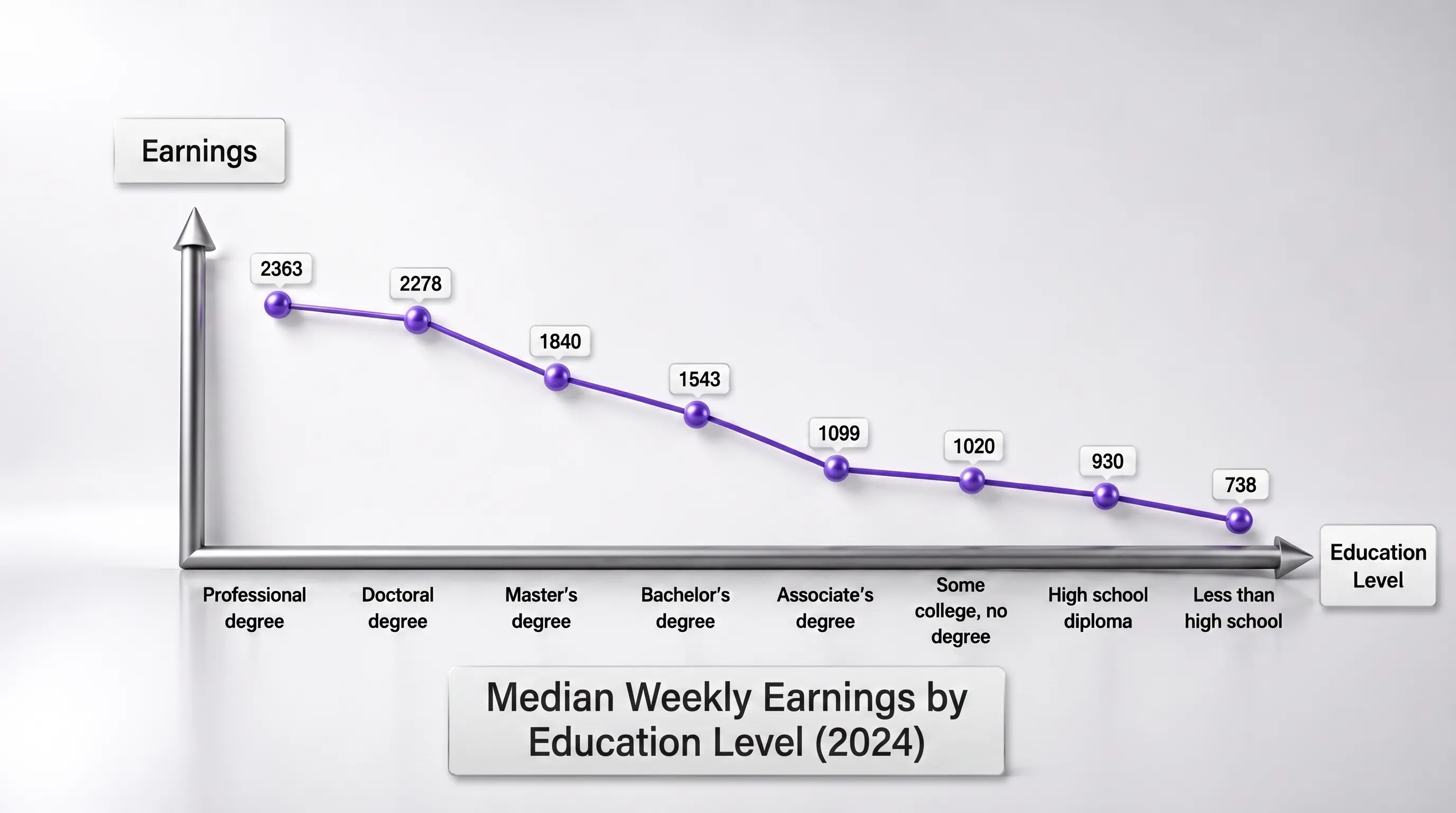
Labor-market data also shows that education still carries measurable value. According to 2024 BLS data, workers age 25 and over with a bachelor's degree had median weekly earnings of $1,543 and an unemployment rate of 2.5%, compared with $930 and 4.2% for workers with only a high school diploma.
At the same time, the shift toward skills-based hiring is not as simple as companies removing degree requirements and immediately changing hiring outcomes. Harvard Business School and the Burning Glass Institute found that many employers have announced reduced degree requirements, but sustained hiring changes have been slower and uneven.
The modern answer is balanced: skills matter, experience matters, and degrees still matter in many contexts.
Why a Diploma Is Still Worth Displaying
It represents a completed long-term commitment
A college diploma represents years of study, deadlines, exams, projects, and persistence. Whether it took four years, two years, or a longer nontraditional path, it marks the completion of a major commitment.
It supports credibility in professional settings
In many offices, diplomas still play a trust-building role. Clients, patients, students, and colleagues may not judge a professional only by the diploma on the wall, but the display can support a broader sense of credibility.
This is especially relevant in clinics, law offices, therapy practices, classrooms, consulting rooms, accounting offices, financial advisory spaces, and academic environments.
It tells part of your career story
A diploma does not tell the whole story, but it tells an important part of it. It can sit alongside certifications, licenses, awards, professional memberships, and other credentials. Together, these documents create a fuller picture of your training and professional path.
It helps preserve an important document
A diploma is an official academic record and a meaningful personal keepsake. Framing it properly helps protect it from handling, bending, fading, moisture exposure, and storage damage.
It can motivate the graduate
For recent graduates, career changers, and professionals who worked hard to earn a degree later in life, seeing the diploma every day can be a quiet reminder of what they completed. That motivation can reinforce progress, identity, and confidence during the early stages of a career or a major transition.
What a Framed Diploma Communicates Today
A framed diploma should not be positioned as proof that someone is better than anyone else. That idea feels outdated.
Today, a framed diploma communicates something more useful: professionalism, discipline, completion, and pride in formal training.
In a world where skills are important, a diploma still says, "This person completed a structured educational journey." It may not prove every skill they have, but it does show that they followed through on a significant academic commitment.
That distinction matters. For a broader view of the traditional display value, University Frames also explains the importance of displaying your diploma. For this article, the point is more specific: a diploma still belongs in a modern professional story when it is displayed with context.
When Displaying a Diploma Matters Most
• Professional offices: Doctors, lawyers, therapists, financial advisors, consultants, educators, accountants, and specialists often display diplomas because clients and patients want visible reassurance.
• Home offices: Remote workers, freelancers, executives, and career changers may use framed diplomas to make a home workspace feel more professional and intentional.
• First apartments or graduate spaces: For recent graduates, displaying a diploma can make the achievement feel real and mark the move from student life to career life.
• Client-facing environments: In any setting where clients, patients, students, or partners visit, a professional credential display can add reassurance.
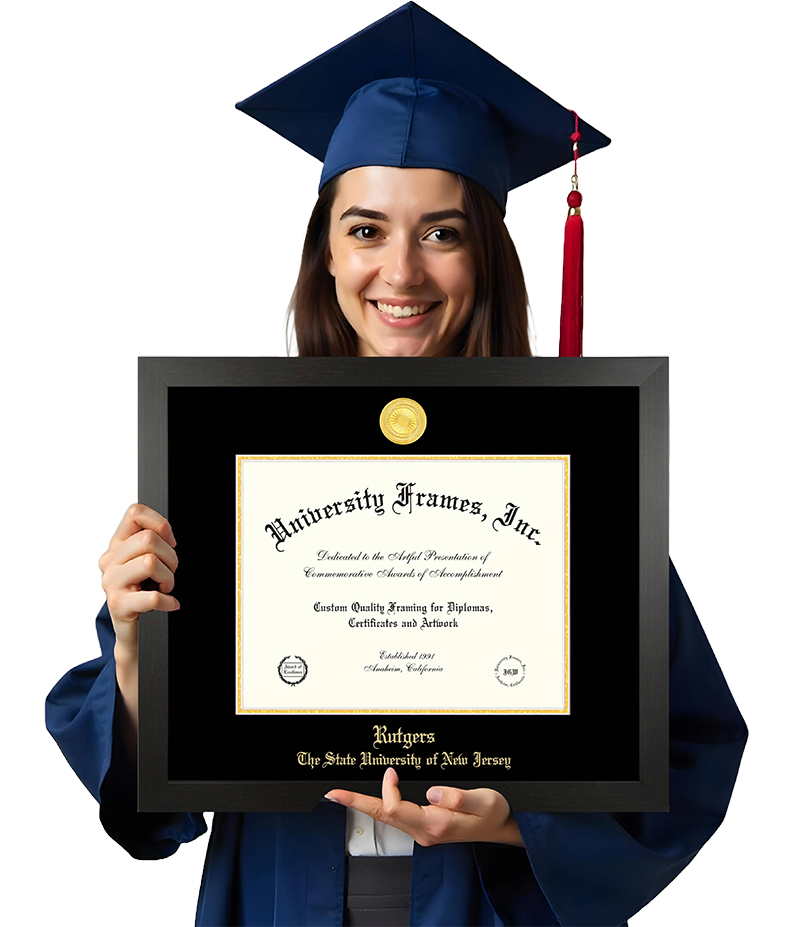
• Graduation gift situations: For parents, partners, and family members, a framed diploma is a practical and meaningful graduation gift because it preserves the document and gives the graduate a polished display option.
When a Diploma Should Be Displayed Alongside Skills and Certifications
Modern professional credibility often comes from a credential ecosystem. That ecosystem may include a college diploma, professional certifications, licenses, continuing education certificates, awards, portfolio samples, work experience, published work, or specialized training credentials.
For example, a therapist may display a master's degree alongside a professional license. A CPA may display a degree with accounting certifications. A software professional may frame a degree while also highlighting technical certifications or portfolio work. A healthcare provider may display degrees, licenses, and specialty credentials together.
This approach reflects the reality of modern careers. The diploma does not need to stand alone. It can anchor a broader display that includes professional certificate frames, professional license certificate frames, or double diploma frames when two academic achievements belong together.
How to Display Your Diploma Without Looking Outdated
A diploma display looks outdated only when it feels careless, crowded, or disconnected from the space. With the right frame and placement, it can look modern, professional, and intentional.
Use a clean, professional frame style
A diploma frame should look polished enough for the importance of the document. Avoid temporary frames, loose-fitting frames, or generic holders. If size is uncertain, check how to measure your diploma before ordering.
Choose school-specific options when school identity matters
If your university identity is important, a school-specific frame or logo mat frame can make the display feel more complete. This works well for alumni pride, graduation gifts, and formal office displays.
Use understated frames for modern offices
Not every diploma display needs strong school branding. In modern home offices or minimalist workspaces, a cleaner frame may fit better. For a lighter, contemporary presentation, acrylic diploma frames can be a strong option.
Match diplomas with certificates and licenses
If you are displaying several credentials, keep the frames visually consistent. Matching frame finishes, mat colors, or layout styles can make the wall feel organized instead of cluttered.
Avoid overcrowding the wall
A diploma display should feel intentional. If you have several credentials, group them carefully rather than filling every available space. The goal is credibility, not visual noise.
Who Should Still Invest in a Diploma Frame?
A diploma frame is still a smart investment for many people, especially when the diploma has personal, professional, or long-term value.
| Audience | Why it matters |
|---|---|
| Recent graduates | A frame protects the original document and marks the transition from student life to career life. |
| Professionals in trust-based fields | A framed diploma can support credibility in client-facing environments. |
| Graduate-degree holders and specialists | Advanced degrees often represent years of focused study and specialization. |
| Gift buyers | A diploma frame is practical, meaningful, and connected to a milestone already earned. |
| Career changers | Framing the diploma can honor the education that marked a new chapter. |
When a Certificate or Skill Credential May Deserve Equal Display Space
A balanced view of skills-based hiring should acknowledge that some certificates and licenses deserve the same level of presentation as a college diploma.
In fields such as healthcare, law, finance, accounting, project management, cybersecurity, technology, education, and skilled trades, certifications and licenses can be highly meaningful. For some professionals, a certification may be the credential clients ask about most. For others, a license may be legally required to practice.
These documents should not be hidden simply because they are not college diplomas. A modern credential wall can include both academic and skills-based achievements. That is often the most accurate way to represent professional growth.
Final Answer: Your Diploma Still Belongs in the Story
Skills-based hiring is changing how employers evaluate candidates, but it does not erase the value of a college diploma.
A diploma still represents education, persistence, training, and a completed milestone. When framed professionally, it can support credibility, preserve an important document, and help tell the broader story of your career.
The key is context. Your diploma should not be displayed as the only proof that you are capable. It should be displayed as part of a complete professional identity that may also include skills, certifications, licenses, experience, and results.
In that sense, a college diploma is still worth displaying because the journey behind the degree still matters.
Recommended Next Step
| Requirement | Recommended Option |
|---|---|
| Preserve and display your degree by university | Shop diploma frames by school |
| Create a tailored frame for a specific document size or style | Build a custom diploma frame |
| Display certifications alongside your degree | Explore professional certificate frames |
| Display professional licenses in a coordinated way | Browse professional license certificate frames |
| Add visible school identity to your display | Choose logo mat frames |
| Preserve the degree that shaped your career story. Display it with the same care it took to earn it. |
|---|
FAQs About Displaying a College Diploma Today
Is a college diploma still worth displaying?
Yes. A college diploma is still worth displaying when it represents an important academic milestone, supports professional credibility, or forms part of a larger credential display. It should be presented alongside skills and experience, not as a replacement for them.
Does skills-based hiring make degrees less important?
Skills-based hiring reduces overreliance on degree labels in some roles, but it does not make degrees irrelevant. Many employers still value degrees, especially in fields where formal education, licensing, or specialized training matters.
Should I display my diploma in a professional office?
Yes, especially if you work in a trust-based field such as healthcare, law, therapy, education, consulting, finance, or accounting. A framed diploma can support credibility and help clients or patients understand your background.
Should I display certifications with my diploma?
Yes. In many modern careers, certifications, licenses, and skill credentials are highly meaningful. Displaying them with your diploma can create a more complete professional credential wall.
How do I make a diploma display look modern?
Use a clean frame, avoid overcrowding the wall, coordinate the frame with your office or home decor, and consider school-specific, understated, or acrylic frame options depending on the space.
Is a diploma frame a good graduation gift?
Yes. A diploma frame is a practical and meaningful graduation gift because it helps preserve the original document and gives the graduate a polished way to display their achievement.
Latest Offers
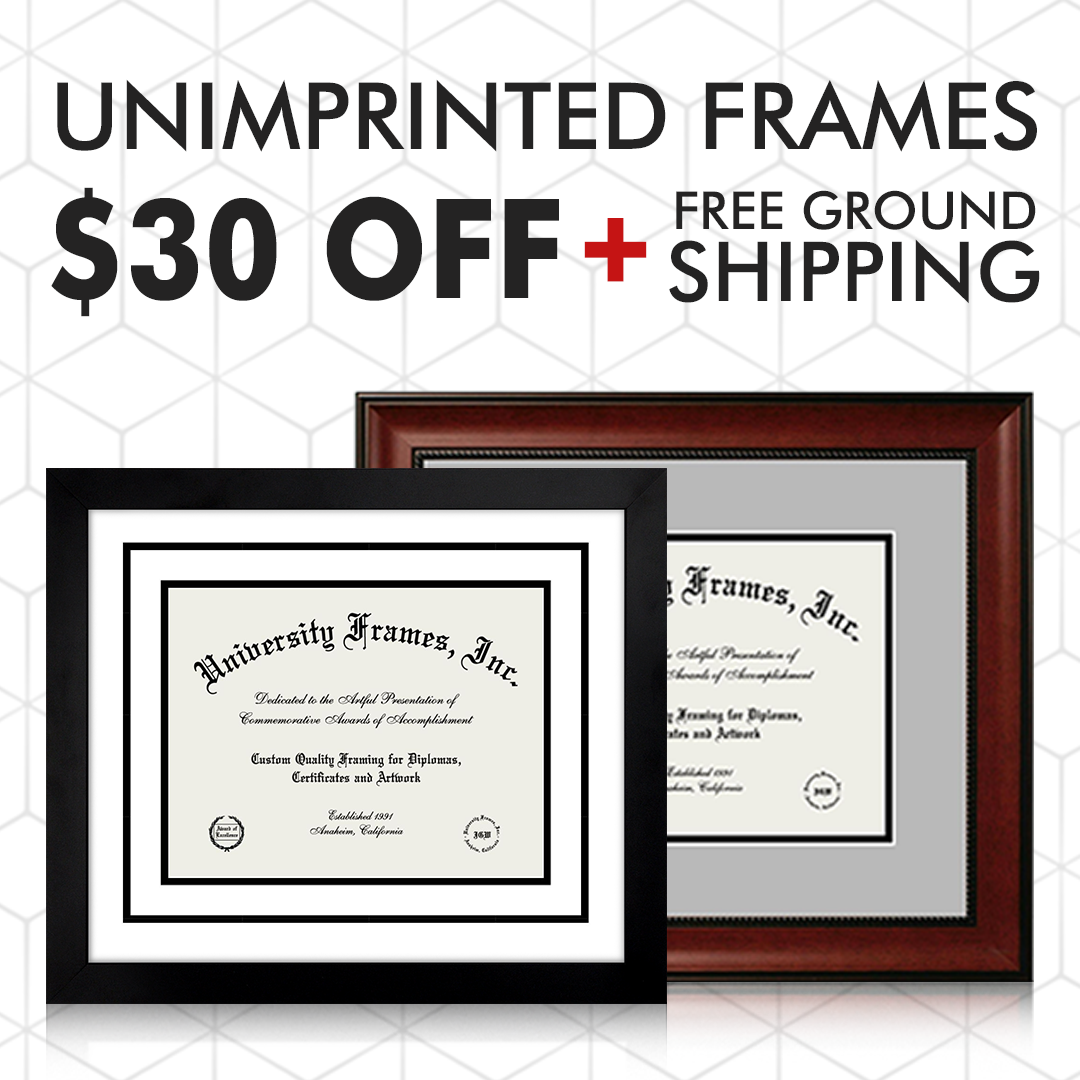

The Quintessence of Achievement.
Your degree is a testament to your hard work and dreams. Frame it beautifully today and be reminded of your achievement every day.